BJJ for Beginners: What Your First Month Actually Feels Like
You walk in thinking you’re in decent shape. You aren’t. Not for this.
Brazilian jiu-jitsu looks slow on video. Two people roll around on a mat. How hard can it be? Then a stranger half your size folds you up like a lawn chair, and you spend ten minutes wondering where your lungs went. Welcome. This is BJJ for beginners, the honest version.
If you’re thinking about starting, or you already signed up and you’re scared, read this. We’re not going to tell you it’s easy. We’re going to tell you what actually happens and why it’s worth it anyway.
What is Brazilian jiu-jitsu?
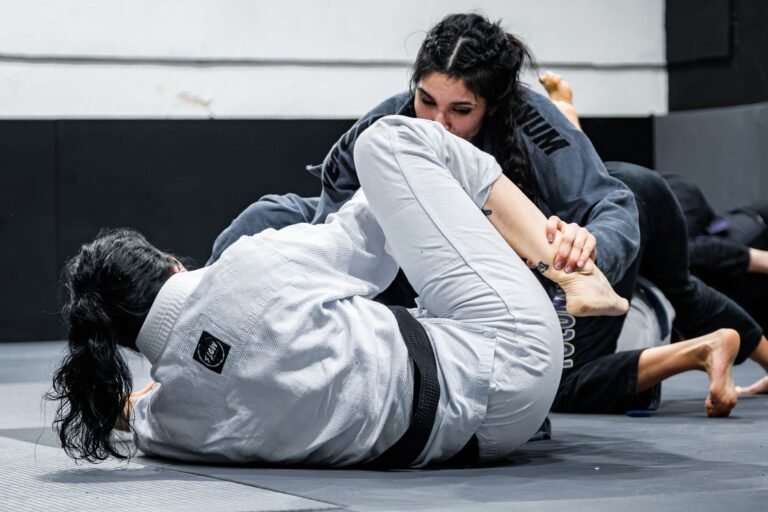
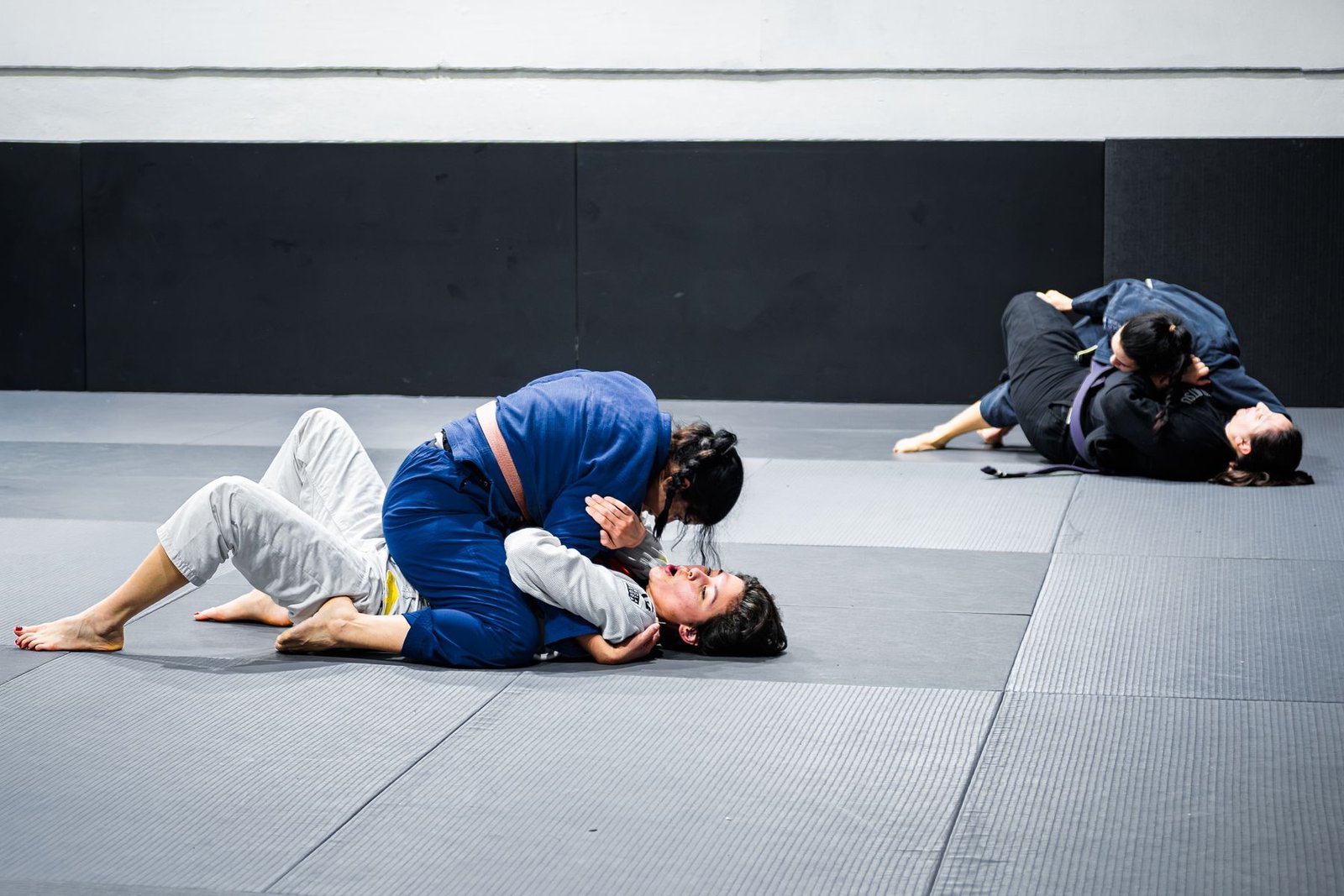
BJJ is a grappling art built around controlling a person on the ground and forcing them to quit with a joint lock or a choke. There’s no striking in a standard class. You win with position, leverage and patience. Size and strength help, but technique beats both more often than people want to admit. That’s the whole appeal. A smaller person who knows what they’re doing can control a bigger person who doesn’t.
Week one: you will be lost
The coach shows a move. It makes sense for about four seconds. Then you try it on a live partner and nothing works. Your hips are in the wrong place. Your arm is somewhere it shouldn’t be. You’re holding your breath and you don’t even know it.
That’s normal. Everyone in that room has been exactly where you are. The purple belt who looks like he’s napping on top of you started the same way. Your only job this week is to show up, drill what you’re shown and not quit.
Week two: the gas tank problem
Grappling cardio is its own animal. You can run five miles and still get smoked in a two minute round. Holding weight, squeezing, framing and escaping is all isometric, and it all burns.
New people burn everything in the first thirty seconds by fighting every position at full power. Don’t. Breathe. Move slow. Learn to rest in bad spots. Staying calm while someone is crushing you is a skill, and it’s the first one that matters. Most beginners spend their first month learning to relax, not learning moves.
Week three: you will tap, a lot
Choked, armbarred, crushed, caught in something you didn’t know existed. Tap early. Tapping isn’t losing. It’s how you stay healthy enough to train tomorrow, and training tomorrow is the whole game.
This is also where the ego shows up. You’ll want to hold out one more second. Don’t. We wrote a whole piece on it: how to handle your ego when you’re getting tapped.
Week four: something clicks
One day you escape a position that flattened you two weeks ago. You might not even know how you did it. Your body just knew. That’s the first real hit of it, and it’s why people drag themselves in at 6 AM when the bed is warm.
How often should a beginner train BJJ?
Two to three classes a week is a solid start. Less than two and you forget everything between sessions. More than three in the first month and your body usually files a complaint. You’re not just learning moves. You’re teaching your joints, neck, fingers and lower back to handle a new kind of stress. Give them time.
Consistency beats intensity. Someone who shows up twice a week for a year will pass the guy who trains six days for a month and disappears.
What to bring to your first BJJ class
- Water. More than you think.
- Trimmed fingernails and toenails. You’ll scratch people and get scratched.
- Clean, fitted gear. Ask the gym if the class is gi or no-gi. Not sure which you want? Read gi vs no-gi.
- Flip flops for off the mat. Never walk on the mat in street shoes and never walk to the bathroom barefoot.
- A mouthguard if your gym asks for one.
For the full rundown on gear, here’s our no-gi gear guide.
Is BJJ dangerous?
It’s a contact sport and people get hurt. Mostly it’s sore ribs, jammed fingers, strained necks and tweaked knees. Most injuries come from ego and bad partners, not from the art itself. Tap early, tell your partner when something hurts, and pick a gym where the coach controls the room. A good gym wants you healthy and coming back.
How long does it take to get good?
Longer than you want. A blue belt usually takes a couple of years or more of steady training, and it varies a lot from person to person. Don’t chase belts. Chase the feeling of being a little less lost than last month.
Ground rules for your first month
- Tap early. Tap often.
- Don’t try to win practice rounds.
- Breathe out. Seriously, breathe.
- Ask questions after class, not in the middle of a roll.
- Show up again two days later.
Give it thirty days
The first month is the hardest because you’re bad at it and everyone can see it. That’s the price. Pay it. Most people quit somewhere in week three. The ones who stay find out what they’re made of. Come back when it’s dark and cold and nobody’s watching. That’s the whole thing.
FAQ
Is BJJ hard for beginners?
Yes. The first few months are rough because everything feels unfamiliar and you get submitted a lot. It gets easier as your body learns the movements and your cardio adapts.
Do I need to be in shape before I start BJJ?
No. You get in shape by training. Show up, go at your own pace and let the class build your conditioning.
How often should a beginner train BJJ?
Two to three classes a week works for most beginners. It gives you enough practice to progress without wrecking your body.
Should I start with gi or no-gi?
Start with whatever your nearest good gym teaches. If you can choose, gi is slower and more technical, and no-gi is faster and closer to wrestling and MMA.
Is BJJ good for self defense?
It teaches you to control and neutralize a person on the ground, which is a useful skill. Training against resisting partners is what makes it work, not memorizing moves.
Train hard. Dress like it. 80SIX makes combat apparel for BJJ, grappling, MMA, boxing, strength training and tactical training. Shop the latest drop and Live Tough.